The All-on-4 Dental Implants Revolution
All-on-4 dental implants have revolutionized the field of dentistry, offering a long-lasting and highly effective solution for patients suffering from missing teeth, gum disease, or other dental conditions. This innovative treatment has completely changed the way we think about tooth replacement, providing a more natural and permanent solution compared to traditional dentures or individual dental implants.
1. Say Goodbye to Dentures with All-on-4
One of the main advantages of All-on-4 dental implants is that they eliminate the need for removable dentures. Dentures can be uncomfortable, unstable, and prone to slippage, causing embarrassment and inconvenience for many patients. All-on-4 implants, on the other hand, provide a fixed and stable set of teeth that function and feel just like natural teeth. This eliminates the need for messy adhesives or constant adjustments, allowing patients to eat, speak, and smile with confidence.
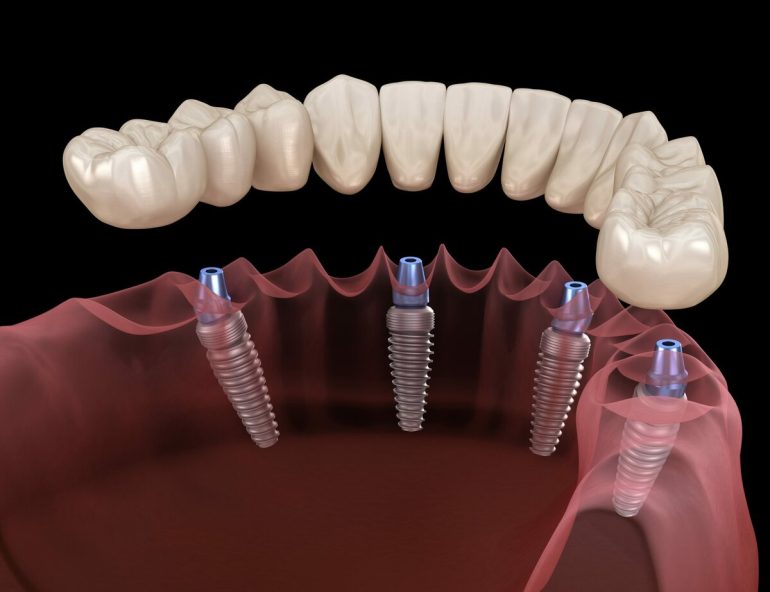
The All-on-4 treatment involves the placement of four dental implants in the jawbone, which act as anchors for a full arch of prosthetic teeth. These implants are strategically positioned to provide maximum support and stability, even in cases where bone density is low. With All-on-4, patients can say goodbye to the hassle and discomfort of removable dentures and enjoy the benefits of a permanent, fixed set of teeth.
2. The Groundbreaking Technology Behind All-on-4
All-on-4 dental implants are made possible by the advancement in dental implant technology. Traditional dental implants require a significant amount of healthy jawbone for successful placement. However, many patients who have suffered from tooth loss or gum disease have experienced a loss in bone density, making it difficult to support individual implants.
The All-on-4 technique overcomes this limitation by utilizing a specific implant placement strategy. Two of the four implants are placed at an angle in the back of the mouth, which maximizes contact with the jawbone and provides increased stability. By angulating the posterior implants, the need for bone grafting or sinus augmentation is often eliminated, reducing the overall treatment time and cost.
3. The Benefits of All-on-4 Dental Implants
All-on-4 dental implants offer numerous benefits compared to other tooth replacement options. Besides providing a permanent and stable solution, All-on-4 implants offer improved oral health, better aesthetics, and enhanced functionality.
One of the key advantages of All-on-4 implants is their ability to preserve the jawbone. Unlike dentures, which can accelerate bone loss over time, All-on-4 implants stimulate the jawbone just like natural teeth. This helps maintain the bone structure and prevent the sunken facial appearance often associated with missing teeth.
In terms of aesthetics, All-on-4 implants provide a natural-looking smile. The prosthetic teeth are custom-made to match the shape, size, and color of the patient’s remaining teeth, resulting in a seamless and attractive smile.
Functional benefits of All-on-4 implants include improved chewing efficiency and speech clarity. With a fixed set of teeth, patients can enjoy their favorite foods without restrictions and speak confidently without worrying about slippage or discomfort.
The All-on-4 Process: Step by Step
4. Consultation: Evaluating Candidacy for All-on-4
The journey to receiving All-on-4 dental implants starts with a comprehensive consultation and evaluation with a qualified dental professional. During this initial appointment, the dentist will examine the patient’s oral health, take x-rays, and assess the bone density to determine if they are a suitable candidate for the All-on-4 treatment.
The dentist will also discuss the patient’s expectations, goals, and any concerns they may have. Based on this assessment, the dentist will create a personalized treatment plan, outlining the necessary steps and timeline for the All-on-4 procedure.
5. The All-on-4 Procedure: What to Expect
The All-on-4 procedure is typically performed in a dental office or clinic under local anesthesia or conscious sedation. The process involves four main steps: implant placement, temporary restoration, healing period, and final restoration.
First, the dental implants are surgically placed into the jawbone. The two posterior implants are angled to maximize stability and support. Once the implants are in position, temporary prosthetic teeth are attached, allowing the patient to leave the office with a functional set of teeth on the same day.
After the initial placement, a healing period of three to six months is necessary to allow the implants to integrate with the jawbone through a process called osseointegration. During this time, the patient will visit the dentist for regular check-ups to ensure proper healing and assess the progress of osseointegration.
Once the healing period is complete, the final restoration is created. This involves taking impressions of the patient’s mouth to create a custom-made set of prosthetic teeth that will be attached to the implants. The final restoration is carefully designed to match the patient’s natural teeth, providing a beautiful and functional smile.
6. Recovery and Aftercare Tips for All-on-4 Patients
The recovery process after All-on-4 dental implant surgery is generally smooth and straightforward. However, it is essential for patients to follow the dentist’s aftercare instructions to ensure optimal healing and long-term success.
During the initial recovery period, it is normal to experience some bruising, swelling, and discomfort. Over-the-counter pain medication and cold compresses can help alleviate these symptoms. It is also crucial to stick to a soft diet for the first few days and avoid hot or hard foods that can irritate the surgical site.
Regular follow-up appointments with the dentist are essential to monitor the progress of healing and make any necessary adjustments. Good oral hygiene practices, such as regular brushing, flossing, and rinsing with antibacterial mouthwash, are crucial to maintaining the health and longevity of the All-on-4 implants.
How All-on-4 Implants Compare to Traditional Implants
7. All-on-4 vs. Traditional Dentures: Which is Better?
When comparing All-on-4 implants with traditional dentures, it is clear that All-on-4 offers significant advantages in terms of comfort, stability, and long-term success. Traditional dentures can be uncomfortable, prone to slippage, and can negatively impact speech and chewing function. All-on-4 implants provide a fixed set of teeth that eliminate these issues and offer a more natural and secure solution.
Additionally, with dentures, bone loss can occur over time due to the lack of stimulation. All-on-4 implants help preserve the jawbone by mimicking the function of natural teeth, preventing bone loss and maintaining proper facial structure.
8. The Cost Comparison: All-on-4 vs. Individual Implants
When considering the cost of All-on-4 implants versus individual dental implants, All-on-4 can be a more cost-effective option. Traditional implants require the placement of one implant per missing tooth, which can become costly, especially for patients with multiple missing teeth. All-on-4 implants, on the other hand, only require four implants to support a full arch of prosthetic teeth, reducing the overall cost of treatment.
The cost of All-on-4 implants may vary depending on factors such as the geographical location, the complexity of the case, and the materials used for the prosthesis. However, when compared to traditional dental implants, All-on-4 can be a more affordable solution for patients seeking a permanent tooth replacement option.
9. Long-Term Success and Durability: All-on-4 vs. Other Implant Options
All-on-4 dental implants are known for their high success rate and long-term durability. With proper care and maintenance, All-on-4 implants can last for many years, providing patients with a stable and functional set of teeth. The strategic placement of the implants and the use of high-quality materials contribute to the long-term success of All-on-4 implants.
Compared to other implant options, such as removable dentures, All-on-4 implants offer superior comfort, stability, and aesthetics. This makes All-on-4 a popular choice among patients looking for a more permanent and natural-looking tooth replacement solution.
FAQs About All-on-4 Dental Implants
10. Can I Get All-on-4 Dental Implants If I Have Bone Loss?
Yes, All-on-4 dental implants are an excellent solution for patients with bone loss. The angulated placement of the implants allows for maximum contact with the existing bone, reducing the need for bone grafting or sinus augmentation procedures. However, a thorough evaluation by a qualified dentist is necessary to determine if you are a suitable candidate for All-on-4 implants.
11. Is the All-on-4 Procedure Painful?
The All-on-4 procedure is typically performed under local anesthesia or conscious sedation, ensuring that patients are comfortable and pain-free during the surgery. After the procedure, some swelling and discomfort are normal, but these can be managed with over-the-counter pain medication prescribed by the dentist. Most patients find that any discomfort is minor and well worth the long-term benefits of the All-on-4 treatment.
12. How Long Does the All-on-4 Process Take?
The All-on-4 process can vary depending on individual cases and healing times. From the initial consultation to the final restoration, the entire process can take around four to six months. However, it’s important to note that patients can leave the dental office on the same day as the surgery with temporary prosthetic teeth attached to the implants, providing immediate functionality and aesthetics.
Throughout the process, patients will have regular follow-up appointments to ensure proper healing and assess the progress of osseointegration. The dentist will determine the optimal timeline for each patient’s individual case, providing a treatment plan that meets their specific needs and goals.
FAQ
Question: What is the All-on-4 dental implant? – The All-on-4 dental implant is a permanent and stable solution for missing teeth that eliminates the need for dentures. It involves placing four dental implants in the jawbone to serve as anchors for a full arch of prosthetic teeth.
Question: How does All-on-4 overcome bone density limitations? – All-on-4 implants utilize innovative implant placement strategies, including angulating the posterior implants, to maximize contact with the jawbone and provide increased stability. This eliminates the need for bone grafting or sinus augmentation procedures, reducing treatment time and cost.
Question: What are the benefits of All-on-4 dental implants? – All-on-4 implants offer improved oral health, better aesthetics, and enhanced functionality compared to other tooth replacement options. They also help preserve the jawbone and provide a natural-looking smile.
Question: How does the All-on-4 process work? – The All-on-4 process involves consultation, implant placement, temporary restoration, a healing period of three to six months, and final restoration. Temporary prosthetic teeth are attached on the same day as the surgery, providing immediate functionality and aesthetics.
Question: What is the recovery process for All-on-4 patients? – The recovery process after All-on-4 dental implant surgery is generally smooth. Patients may experience bruising, swelling, and discomfort, which can be managed with over-the-counter pain medication and cold compresses. Following the dentist’s aftercare instructions and regular check-ups are crucial for optimal healing and long-term success.
Question: How does All-on-4 compare to traditional dentures? – All-on-4 offers advantages over traditional dentures in terms of comfort, stability, and preservation of the jawbone. All-on-4 provides a fixed set of teeth that eliminate the discomfort and inconvenience of removable dentures.
Question: How does All-on-4 compare to individual dental implants in terms of cost? – All-on-4 can be a more cost-effective option compared to individual dental implants. Traditional implants require one implant per missing tooth, which can become costly for patients with multiple missing teeth. All-on-4 only requires four implants to support a full arch of prosthetic teeth, reducing the overall cost of treatment.
Question: Are All-on-4 dental implants durable and successful? – All-on-4 dental implants have a high success rate and are known for their durability, comfort, and natural aesthetics. With proper care and maintenance, All-on-4 implants can last for many years, providing patients with a stable and functional set of teeth.